Concrete Driveways, Paths & Kerbs
Driveways fail at the edges, the joints and the drainage, almost never in the middle. We get the falls, the thickness and the jointing right first, then finish it in whatever suits the property.
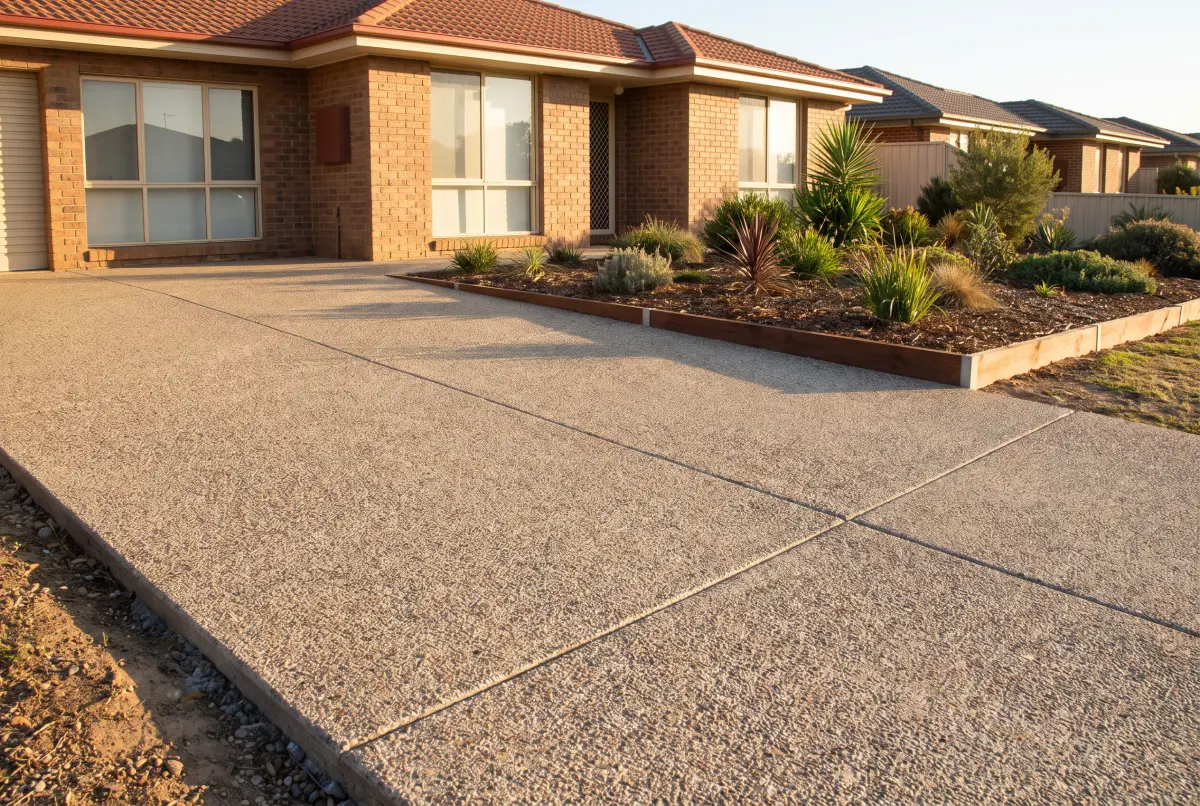
Falls and joints do the work
Water is what destroys external concrete, so the first decision is where the water goes. Falls get set to move it away from the building and into drainage rather than into a puddle outside the garage door.
Joints come next. Control joints cut or tooled at the right spacing so the slab cracks where you chose instead of where it decides, and isolation joints where the concrete meets a building, a pit or an existing slab. We pour driveways and hardstands, footpaths and walkways, vehicle crossings and laybacks, kerb and gutter, and edging and mowing strips. Thickness and reinforcement come from what will actually drive on it. A domestic driveway and one taking a delivery truck are not the same slab, and pricing them as though they were is how the truck one ends up cracked.
Finishes, compared honestly
A plain broom finish is the cheapest and the most durable, and it looks like what it is. Exposed aggregate costs more, hides marks well and grips better in the wet. Coloured and stencilled finishes look sharp when new, then show wear and patch repairs more obviously as they age. Decorative overlays sit on top of an existing slab and only make sense if the slab underneath is sound.
We will tell you which one suits the use and the budget rather than steering you at the dearest option.
What's included
- Driveways, hardstands and parking areas
- Footpaths, walkways and vehicle crossings
- Kerb and gutter, edging and mowing strips
- Falls set for drainage, not just for looks
- Control and isolation joints planned to the job
- Broom, exposed aggregate and coloured finishes
Written price with the scope stated.
Driveways, Paths & Kerbs: your questions
Tell us what you need built.
Send drawings, photos or just a description. Straightforward jobs get priced from what you send. Anything structural gets looked at first. You get a written quote with the scope stated either way.